
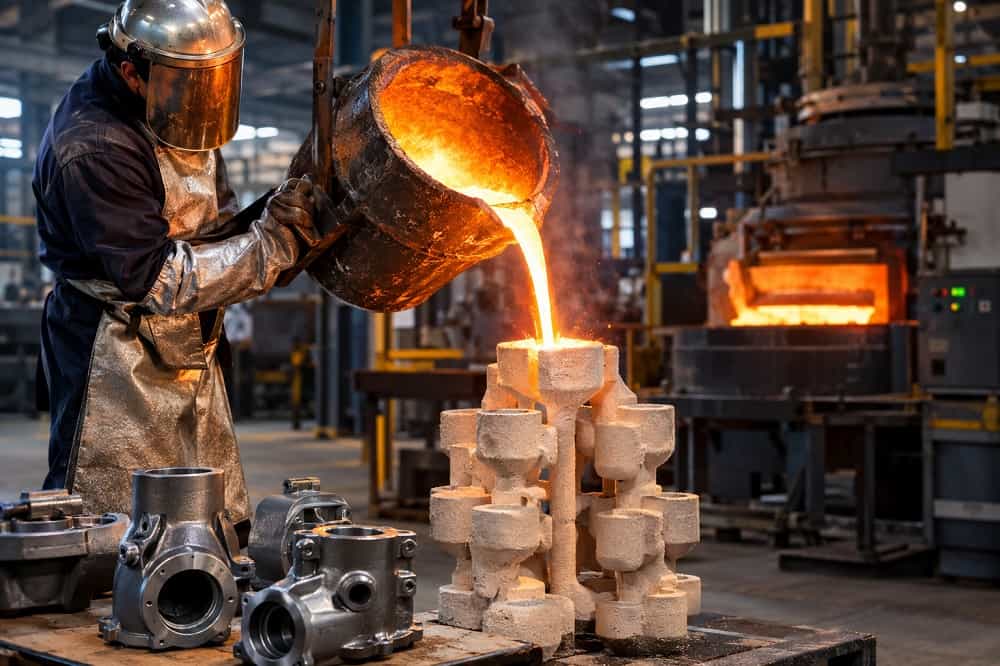
In industry’s most punishing corners—where deep-sea oil platforms fight against annihilating pressure or aerospace turbines face searing temperatures—selecting the proper material can be the difference between triumph and disaster. Carbon steel investment castings has become the exceptional solution, producing parts with precision accuracy that resist the most extreme conditions. This in-depth look investigates the performance of carbon steel when compared to other alloys, focusing on its advantages in investment casting for high-risk applications.
From the nuts and bolts of the properties of materials to the real-world victories, cost analyses, and breakthrough innovations, this piece provides tough-talk insights for engineers, manufacturers, and decision-makers struggling with extreme environments.
Carbon Steel’s Role in Precision Casting: Built Tough
Carbon steel, a lean combination of carbon and iron, is an industrial workhorse. It’s hard, versatile, and won’t break the bank. When carbon steel investment casting is involved, it’s a powerhouse, creating complex pieces that can withstand the abuse in harsh conditions. This topic dissects what makes carbon steel tick and why it’s a top choice for high-pressure applications.
Busting Up Carbon Steel’s Composition
Carbon steel is categorized into three varieties, ordered according to carbon level: low (0.04–0.3%), medium (0.31–0.6%), and high (0.61–2.1%). Low-carbon steel is bendy, excellent for auto components such as brackets which have to be bent without breaking. Medium-carbon steel is the Goldilocks option, tough and robust, ideal for military crankshafts which bear the brunt. High-carbon steel is the tough guy, as hard as nails for applications such as springs or cutting tools. In contrast to alloy steels that are filled with extras such as chromium, carbon steel takes it straightforward, allowing heat treatments to fine-tune precisely what is required for the task.
Why Carbon Steel Dominates in Investment Casting
Carbon steel investment casting applies the lost-wax process in producing parts with wacky-tight tolerances—imagine ISO 8062 CT5-CT8. It’s a hot process, with carbon steel having a melt point of approximately 2500°F, so it requires serious equipment, but the payoff is parts that won’t bat an eye under pressure. In contrast to sand casting, which can result in rough and pitted surfaces, investment casting produces smooth finishes, cutting time and money on cleanup. That’s why it’s relied on for critical parts where even the slightest flaw could be disastrous.
The Not-So-Trivial Parts of Casting Carbon Steel
It’s not always easy street. Cooling carbon steel can introduce oxides that ruin the surface, so additional work such as shot blasting to smooth out the surface. High-carbon steel, unless cooled with care, can shatter under stress.
Carbon Steel Face-to-Face with Other Alloys
Selecting an alloy for precision casting is a matter of what the work requires—blazing temperatures, corrosive sludge, or jarring stress. This section puts carbon steel on the canvas with stainless steel, alloy steel, and non-ferrous alloys such as aluminum and titanium to match up in harsh environments.
- Carbon Steel vs. Stainless Steel
Stainless steel, with a minimum of 10.5% chromium, brushes off rust, so it’s the first choice for marine equipment or chemical plants. But carbon steel takes over when the application demands raw hardness and impact, such as mining drill bits grinding through rock. Carbon steel investment casting creates gears that scoff at abrasive wear, whereas stainless steel’s softer edge would wear out faster. And, to top it off, stainless steel is twice or three times more expensive, a bitter pill to swallow for large production runs.
- Carbon Steel vs. Alloy Steel
Alloy steels, loaded with molybdenum or vanadium, have even more grit to offer. Low-alloy steels (below 8% additives) are good for oil pipes, but the high-alloy ones excel in aerospace turbines. Carbon steel, however, keeps costs down and machines like a dream. Carbon steel investment casting with AISI 1045 cranks out sturdy structural parts without the budget-busting costs of alloying. Alloy steels need long, complex heat treatments, slowing things down compared to carbon steel’s quick turnaround.
- Carbon Steel vs. Non-Ferrous Alloys
The lightweights are aluminum and titanium, essential for aerospace. Aluminum’s low weight (2.7 g/cm³ compared to carbon steel’s 7.8 g/cm³) saves on weight, but it melts at only 900°F, so it’s useless for high-heat work. Titanium has a killer strength-to-weight ratio, but it costs an arm and a leg. Carbon steel’s magnetic field is ideal for motor components, where aluminum and titanium are no good. Carbon steel investment casting aced impossible shapes, which puts aluminum’s die-casting abilities in the dust.
Investment Casting: The Powerhouse of Precision
Investment casting, or lost-wax casting, is the industry leader in producing highly precise parts. This chapter delves into why carbon steel investment casting surpasses the rest for extreme situations.
How Investment Casting Gets It Done
It begins with a wax model covered in ceramic slurry to create a mold. The wax is washed away, and molten carbon steel takes its place. After it solidifies, the ceramic is crushed, resulting in a part that’s almost on the money. It achieves tolerances as small as ±0.005 inches, much tighter than sand casting’s ±0.030 inches. Foundries such as Milwaukee Precision Casting employ it to produce carbon steel gears, cutting machining expenses big time.
Why It Beats Other Methods
Sand casting is inexpensive, but parts come out rough and require extensive finishing. Die casting is wonderful for churning out aluminum parts but cannot deal with the high melting point of carbon steel. Carbon steel investment casting is the winner for intricate, thin-walled components such as aerospace fittings, with less material wasted. It also allows designers to be creative with hollow sections, shaving weight without sacrificing strength.
Heat Treatment: Carbon Steel’s Hidden Weapon
Heat treatment, for instance, quenching and tempering, changes the physical properties of carbon steel in a desired manner. Medium-carbon steel castings that are hardened to 200–300 HB are perfect for wear resistance in hydraulic machinery. Through carburizing, low-carbon steel not only increases surface hardness but also remains ductile in the core, thus being suitable for shock-resistant parts. Such kinds of treatments make carbon steel investment casting the preferred choice over alloys that need the expensive alloying elements.
Where Carbon Steel Proves Its Mettle
Carbon steel’s toughness makes it a star in industries facing the roughest conditions. This section highlights real-world applications where carbon steel investment casting comes through in the clutch.
- Oil and Gas: Holding Strong in the Deep
Offshore rigs have to contend with crushing pressures and gritty slurries. Carbon steel investment casting creates AISI 1020 valve bodies with CT7 tolerances, providing leak-proof seals at 10,000 psi. The capacity of carbon steel to absorb impact prevents parts from buckling due to sudden pressure surges, as brittle cast iron would. ForceBeyond applies water glass casting for affordable, high-volume manufacturing.
- Aerospace and Defense: Built for the Long Haul
Aerospace components must be dead-on and wear like iron. Carbon steel investment casting forms AISI 1045 landing gear fittings with strength combined with easy machinability. In the military, medium-carbon steel triggers for guns withstand heavy usage. Carbon steel resists repeated stress where aluminum would fail by cracking. Engineered Precision Casting Co. casts more than 75 alloys with carbon steel being a favorite for these applications.
- Mining and Heavy Equipment: Grinding Out Results
Mining equipment gets hit every day with rock and ore. Abrasion-resistant AISI 1060 high-carbon steel crusher jaws, produced through carbon steel investment casting, maintain their shape while enduring wear. The technique acquires fine details such as gear teeth, minimizing finishing work. Carbon steel is cheaper than alloy steel, making it a wise choice for large-scale mining operations.
- Power Generation: Resisting the Fire
Power plants subject components to extreme heat and continuous stress. Carbon steel investment casting builds AISI 1030 turbine fittings that withstand 600°C steam conditions. Affordability of carbon steel permits mass production, as opposed to expensive nickel alloys utilized in comparable applications.
What’s New in Carbon Steel Investment Casting
Carbon steel investment casting is being seriously improved by new technology. This topic explores the innovations making it even more suitable for extreme use.
Simulations That Catch Problems Early
Foundries employ software such as MAGMASOFT to simulate virtual casting trials, identifying problems such as porosity or crack before they occur. This optimizes mold designs, so parts can withstand high-pressure applications. Dawang Metals employs these technologies to achieve CT5-CT6 tolerances, reducing lead times to 4–6 weeks.
3D Printing for Quick Turnarounds
3D printing is disrupting wax pattern manufacturing, allowing foundries to quickly churn out complicated designs. Turbine blades with finicky cooling channels are simpler to cast. CFS Foundry saves money on low-volume carbon steel investment casting jobs through 3D printing.
Casting That’s Kind to the Planet
Green habits are catching on, with foundries employing water-based ceramic slurries and recycling wax. The recyclability of carbon steel—85% of U.S. steel is reused—makes it a reliable option. Electric arc furnaces with precise alloy control reduce energy consumption, pleasing green-conscious clients.
Smarter Alloys for Tougher Parts
Adding minute amounts of boron or other elements strengthens carbon steel without increasing costs. Micro-alloy castings stand their ground in heavy-duty applications such as automotive drivetrains, making carbon steel investment casting inexpensive.
The Bottom Line: Carbon Steel’s Cost Advantage
Choosing an alloy is about striking a balance between performance and cost. This section does the math on carbon steel investment casting versus other alloys.
What It Costs Upfront
Carbon steel is significantly less expensive than stainless steel (2–3 times more) or titanium (10 times more). Carbon steel investment casting reduces machining requirements, conserving labor over alloy steel’s prolonged heat treatments. A carbon steel valve casting is 30–40% less expensive than stainless steel, a tremendous savings for strained budgets.
Maintaining Parts Over the Long-Term
Carbon steel rusts when wet, so it requires coatings such as zinc or epoxy, which cost more to maintain. In dry environments, its durability translates to fewer replacements. Stainless steel forgoes the rust but is more expensive upfront. For mining, carbon steel’s resistance to wear makes recoating a small price to pay.
Scaling Up for Big Orders
Carbon steel investment casting accommodates small and large quantities with no difficulty. Water glass casting maintains low costs for bulk orders, and silica sol provides accuracy for aerospace. Alloy steel’s higher expense and longer processing renders it less adaptable. American OEMs enamored with carbon steel’s repeatability for auto components.
Real-World Proof: Carbon Steel Delivers
Success stories reveal what carbon steel investment casting is capable of. These confirmed case studies highlight the difference it makes in challenging areas.
Case Study 1: Offshore Valves That Don’t Leak
A large oil corporation partnered with a company on valve bodies for deep-sea rigs. With carbon steel investment casting with AISI 1010, they achieved CT7 tolerances with no leakage at 10,000 psi. Impact resistance of the parts prevented cracking on pressure surges, which saved 25% compared to stainless steel.
Case Study 2: Aerospace Fittings That Last
An aerospace company partnered with Engineered Precision Casting Co. to cast AISI 1045 landing gear fittings. Carbon steel investment casting aced ±0.005-inch tolerances, reducing machining by 40%. The fittings endured 100,000 stress cycles, lasting longer than aluminum.
Case Study 3: Mining Jaws That Keep Crushing
One mining company commissioned metal casting manufacturing company to supply AISI 1060 crusher jaws through carbon steel investment casting. High-carbon steel withstood quartzite ore, lasting 30% longer than alloy steel. Silica sol casting, maintained surfaces smooth, reducing maintenance.
Case Study 4: Turbine Fittings That Take the Heat
A power plant depended on CFS Foundry for AISI 1030 turbine fittings. Carbon steel investment casting yielded parts that withstood 600°C steam, trimming 20% off the nickel alloy cost. Precision was assured by the process for high-stress applications.
Overcoming Carbon Steel’s Challenges
Carbon steel investment casting is a champion, but it’s not perfect. This section describes the challenges and how to overcome them.
Defending Against Rust
Carbon steel low chromium content makes it prone to rust in moist conditions. Zinc plating or epoxy coats prevent corrosion. Galvanized carbon steel bolts used in construction can withstand 20 years. Stainless steel prevents rusting at a higher cost.
Maintaining High-Carbon Steel Flexibility
Hardness in high-carbon steel makes it brittle with the risk of cracking under stress. Tempering the parts following quenching maintains toughness but flexibility. Controlled cooling in Vast Cast prevents defects in high-carbon components.
Smooth Out Surfaces
Oxides on cooling can roughen surfaces. Silica sol casting produces smooth finishes (Ra 3.2 µm) versus water glass. Shot blasting smooths out to aerospace standards.
Handling Heat Expansion
Carbon steel heats up more than stainless steel at high temperatures, which can play havoc with dimensions. Mold design with care and cooling stabilize parts, so turbine components remain on target.
What’s Coming for Carbon Steel Investment Casting
The future of carbon steel investment casting is rosy, with the latest tech and trends leading the charge. This section takes a sneak peek at what’s ahead.
AI and Automation Take the Wheel
AI-aided quality inspections catch errors in the moment, increasing yields. Automated pouring systems get precision down to a science, reducing waste. Norton Cast’s adoption of these technologies has reduced costs by 15% while increasing reliability.
Combining Casting with 3D Printing
Merging carbon steel investment casting with 3D printing produces components with untamed internal geometries, such as turbine cooling passages. The combination is gaining popularity in aerospace and automotive applications.
Lighter, Stronger Components
Micro-alloying using boron maintains carbon steel light weight and strong, ideal for use in electric vehicle parts. These adjustments maintain carbon steel investment casting cost-competitive.
Smarter, Greener Supply Chains
As demand for carbon steel castings rises, foundries are refining supply chains. Sourcing locally and using recycled steel reduces costs and emissions. Dawang Metals draws 90% of its steel from scrap, remaining environmentally friendly.
Conclusion
Carbon steel investment casting represents an attractive combination of precision, strength, and cost-effectiveness that suits the most demanding applications perfectly. The accomplishment of the production of complicated and reliable pieces places carbon steel casting at the top of the list in oil and gas, aerospace, and mining industries. Although some problems with corrosion still remain, the solutions found in coatings, heat treatment, and casting techniques reduce these problems. When it comes to stainless steel, alloy steel, or non-ferrous alloys, carbon steel is the one that sets the tone by delivering performance at a reasonable price.
In an attempt to be more sustainable and energy-efficient, industries will use carbon steel investment casting more with the help of 3D printing, AI, and green processes. For engineers and manufacturers, recognizing its benefits—and limitations—gives them a key to the design of components that can survive even in the most severe conditions. Whether it is a valve resisting deep-sea pressures, or a gear working hard for ore, carbon steel, cast with precision, is never to doubt its value.