
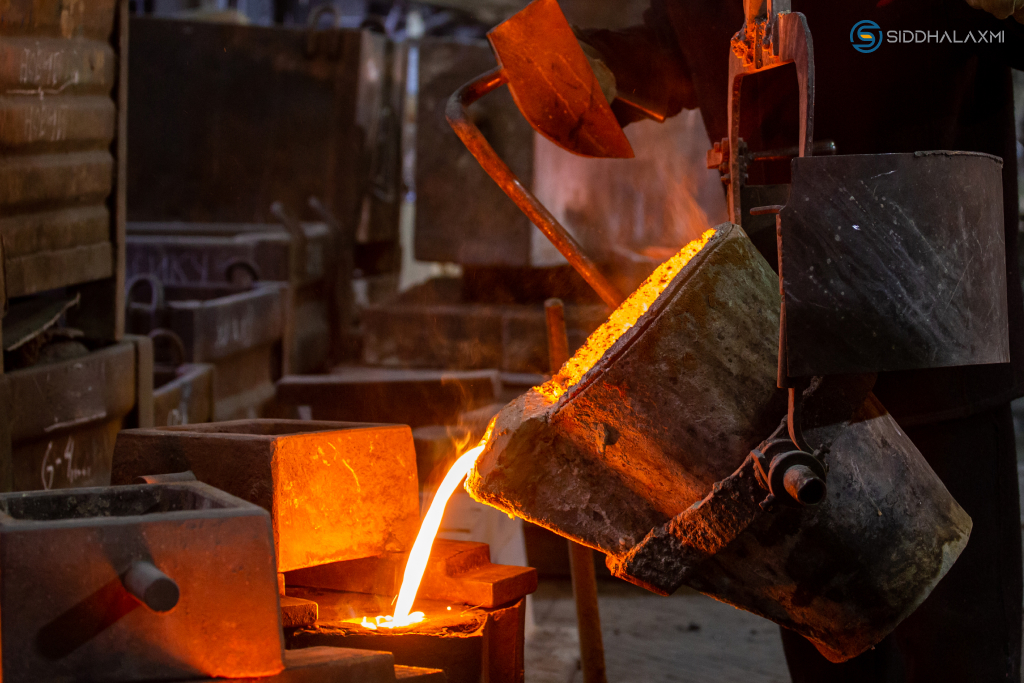
The investment casting market is crowded. Everyone claims precision. Everyone claims quality. Everyone claims reliability. Yet industrial plants keep replacing parts earlier than expected, audits keep flagging the same defects, and downtime keeps tracing back to castings that were “within tolerance” but failed anyway. Reliability, in this space, is not a badge. It is behavior repeated under pressure. That is where real manufacturers of investment castings separate themselves from noise.
This is not a comfort story. This is how the line is actually drawn.
Reliability Is Decided Long Before Metal Is Poured
Most casting failures are already locked in before molten metal ever touches a shell. Wax distortion, inconsistent shell build, rushed dewaxing, careless firing—these steps decide internal soundness. Inspection cannot undo bad upstream decisions.
Reliable manufacturers of investment castings treat early-stage control as sacred. Wax patterns are dimensionally stable, not “close enough.” Shell layers are uniform, not eyeballed. Dewaxing avoids thermal shock. Firing cycles are followed because someone learned the hard way what happens when they are not.
When upstream discipline slips, defects simply hide until service life exposes them.
Process Discipline Is Not Optional, It Is Structural
Investment casting is fragile by nature. One weak link collapses the chain. That is why discipline matters more than capacity.
Wax injection pressure matters. Shell drying time matters. Slurry chemistry matters. Pour temperature matters. Cooling rate matters. None of these variables are negotiable when reliability is the target.
Unreliable foundries adjust parameters “on the floor.” Reliable ones lock them down and never touch them again unless data demands it. Stability beats flexibility every time in this process.
A dependable manufacturer looks boring from the outside. That boredom is earned.
Metallurgy Is the Silent Judge
Investment casting magnifies metallurgical mistakes. Thin sections, complex geometry, and directional solidification leave no room for chemistry drift.
Chromium controls corrosion resistance. Nickel stabilizes structure. Molybdenum protects against localized attack. Trace elements decide whether a casting survives fatigue or fractures early. Small deviations create large consequences.
Reliable manufacturers of investment castings reject heats that drift. They do not negotiate with metallurgy. Castings either meet chemistry or never get poured.
Failures in the field almost always trace back to compromises made quietly at the furnace.
Design Pushback Is a Reliability Signal
The most dangerous phrase in casting is “build to print” when the print invites defects. Sharp transitions, uneven wall thickness, poor feeding access—these designs fail even when manufactured correctly.
Reliable manufacturers push back. They challenge geometry. They suggest changes. They simulate flow and solidification before tooling is cut. They accept friction early to avoid failure later.
Silence during design review is not cooperation. It is avoidance.
Repeatability Matters More Than One Perfect Sample
One flawless casting proves nothing. Reliability lives in the tenth batch, the fiftieth batch, the hundredth batch. Tool wear, shell variation, temperature drift—these are where weak operations collapse.
Reliable manufacturers of investment castings monitor drift constantly. Tooling is maintained. Process windows are respected. Dimensional control is statistical, not anecdotal.
Customers do not buy prototypes. Customers buy consistency.
Verification That Survives Scrutiny
Trust is irrelevant without evidence. Chemical analysis confirms alloy integrity. Mechanical testing validates strength and toughness. Non-destructive testing exposes what eyes cannot see. Dimensional checks ensure assemblies fit without force.
Traceability connects everything. Heat number. Batch record. Inspection history. When questions come, answers already exist.
A manufacturer without traceability is not economical. It is risky.
Where Weak Investment Castings Are Exposed Fast
Certain environments act like lie detectors.
Energy and Power
Thermal cycling turns residual stress into cracks.
Oil, Gas, and Chemical Processing
Corrosion and pressure expose alloy shortcuts.
Aerospace and Mobility
Thin sections magnify every internal defect.
Industrial Machinery
Fatigue reveals grain structure mistakes.
In these sectors, excuses fail quickly.
The Mistakes Buyers Keep Paying For
| Buyer Assumption | Reality on the Floor | Long-Term Cost |
| Visual quality equals integrity | Internal defects remain hidden | Early failure |
| Certifications guarantee consistency | Process drift still happens | Rework, rejection |
| Lowest price wins | Hidden lifecycle cost dominates | Downtime |
| Samples prove capability | Production exposes weakness | Supply instability |
| Inspection replaces control | Defects already formed | Scrap, disputes |
Reliable manufacturers close these gaps by design, not by explanation.
Reliability Looks Uneventful on Purpose
The strongest signal of reliability is the absence of drama. No emergency replacements. No unexplained cracks. No dimensional surprises. No missing records. Just parts that disappear into service and stay there.
That is how serious manufacturers of investment castings operate. Process first. Metallurgy first. Evidence first.
Within this mindset, operations such as Siddhalaxmi emphasize controlled investment casting practices, stable metallurgy, and application-driven manufacturing where reliability is assumed, not advertised.
The Questions That Instantly Expose a Reliable Investment Casting Manufacturer
Most supplier evaluations fail because the wrong questions get asked. Buyers focus on capacity, certifications, and pricing tiers. None of those reveal how a casting will behave after six months of service. Reliability shows up only when pressure is applied—technical pressure, not commercial talk.
A reliable manufacturer does not struggle with direct questions. Weak ones do.
The fastest way to separate dependable manufacturers of investment castings from risk-heavy suppliers is to force the conversation away from promises and into process behavior. The answers below never come from sales teams. They come from the shop floor, metallurgy lab, and quality records.
What to Ask — and What the Answers Reveal
| Question Asked | What a Reliable Manufacturer Can Answer Clearly | What an Unreliable One Tries to Avoid | Why It Matters |
| How is wax pattern distortion controlled batch to batch? | Injection parameters, tooling maintenance cycles, rejection limits | “It hasn’t been a problem so far” | Dimensional drift starts here |
| How is shell thickness consistency verified? | Layer count control, slurry monitoring, drying time discipline | Visual checks or vague process talk | Shell inconsistency causes porosity |
| What triggers rejection at the melt stage? | Defined chemistry limits, automatic rejection thresholds | “Minor deviation is acceptable” | Metallurgy decides service life |
| How is solidification behavior validated before production? | Simulation data, riser logic, cooling control | Trial-and-error language | Shrinkage defects form here |
| Can every part be traced to its heat and inspection record? | Immediate access to heat, batch, and test data | Delayed or partial records | Accountability collapses without traceability |
| How is process drift detected over long runs? | Statistical monitoring, tooling wear limits | “We inspect more often” | Inspection cannot fix drift |
These questions are uncomfortable for unreliable suppliers because they force precision. There is no room for storytelling. Either systems exist, or they do not.
Reliable manufacturers answer quickly because these controls are already embedded. Weak ones slow down because they are inventing explanations in real time.
This section alone prevents most long-term failures—if buyers actually use it.
Conclusion
A reliable manufacturer of investment castings is defined by restraint, not claims. Fewer adjustments. Fewer surprises. Fewer explanations. Reliability is engineered quietly through discipline, control, and accountability.
In a market full of suppliers, only a handful of manufacturers of investment castings deliver parts that never ask for attention again. That silence is not luck. It is structure.